Matru Shraddha is Shraddha offered for a deceased mother. The family remembers her by name and relationship, offers food and water for her welfare, and follows its tradition of feeding and giving.
Sacred places
Matru Shraddha: remembering a deceased mother
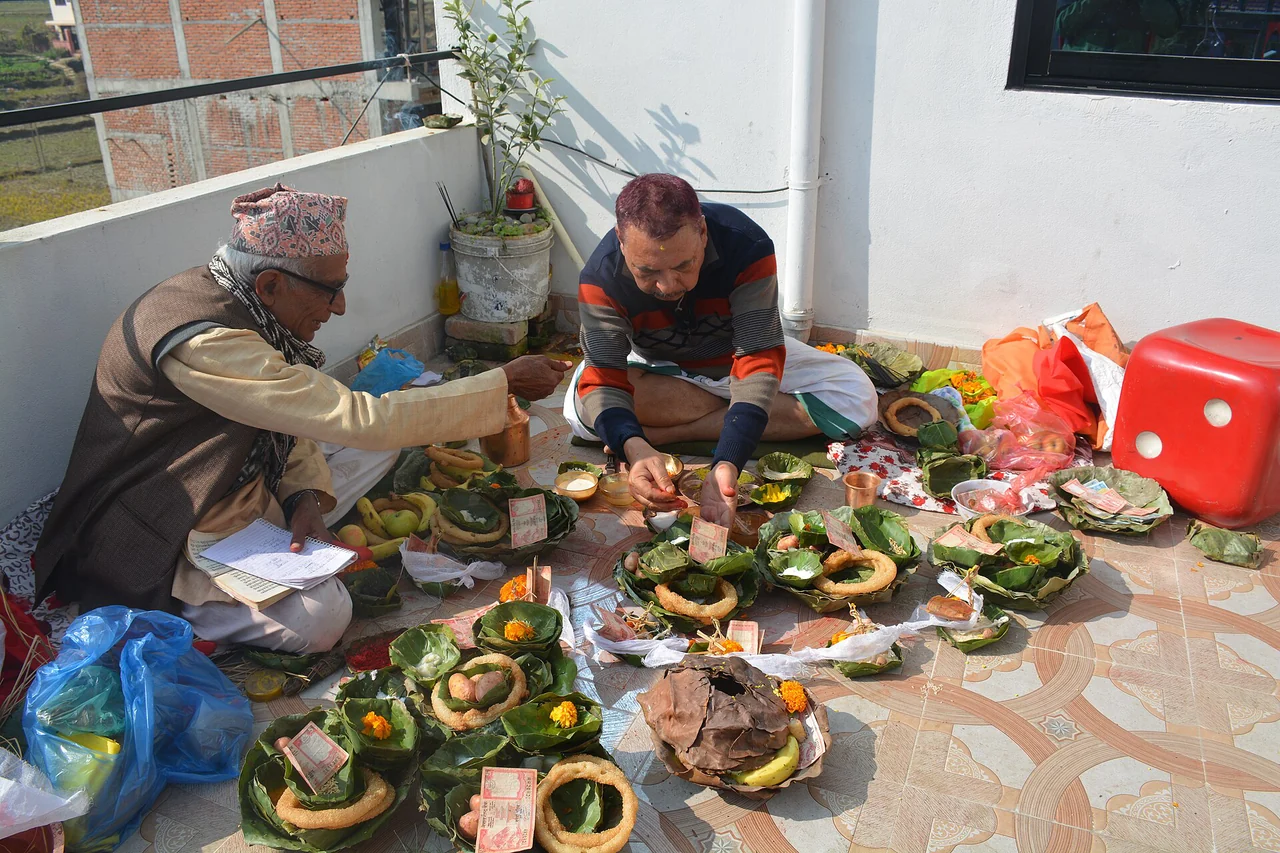
A mother's Shraddha and the maternal ancestors
Remembering your mother and remembering the maternal line do not name exactly the same group. The maternal line can include your mother's parents and earlier generations. If a family says only “maternal Shraddha,” ask which relatives are intended.
The distinction matters when names and relationships are stated in the sankalpa, the declaration of the ceremony's purpose. A clear account of the relatives being remembered is more useful than assuming a broad label includes everyone.
Must a mother's Shraddha take place at Siddhpur?
No. Siddhpur's special association with mothers does not make it the only place where a mother can receive Shraddha. Chapter 84 of M. N. Dutt's Garuda Purana translation discusses a deceased mother's separate Shraddha and remembrance at Gaya.
That passage also answers another common confusion: Gaya in Bihar is not exclusively a place for fathers. A pilgrimage site's special name and the family relationship named in the ceremony are separate matters.
Why is Siddhpur called Matru Gaya?
BAPS Swaminarayan Sanstha links the mother's Shraddha tradition at Siddhpur with Bindu Sarovar and Kapila and Devahuti. The Pushtimarg account of Siddhpur's 72nd Baithak also recalls Kapila's teaching to his mother and Vallabhacharya's visit.
Those accounts explain the religious setting of the pilgrimage. For the individual shrines, the Bhagavata passages and the distinction between the ancient Bindu lake narrative and the present site's identification, see the Siddhpur sacred-places guide.

Which date should the family follow?
First identify the occasion. An annual Shraddha follows the mother's lunar anniversary. A Pitrapaksha observance belongs to the ancestral fortnight. Rites soon after a death and Sapindikaran have another context. Calling each of them Matru Shraddha does not give them the same date or sequence.
Provide her name, your relationship, the known tithi or original death details, and the rites already performed. If the death is recent, say so at the start.
Can a daughter perform her mother’s Shraddha?
Some religious traditions permit it. Vishnu Purana 3.13 explicitly says that annual ancestral rites may also be performed by women (Wilson translation, printed p. 319). A blanket prohibition on every form of Shraddha is therefore too broad. The principal performer of a particular ceremony is chosen according to the family’s adopted procedure.
If the death was recent, include the details of rites already performed. The preparation checklist helps gather names, dates and practical arrangements.
Sources & further reading
- BAPS Swaminarayan Sanstha — Hindu Rites & RitualsThe Shraddha discussion includes offerings, timing and observance according to means. It describes a particular religious tradition.
- Pushtimarg — Siddhpur, 72nd BaithakThis tradition’s account of Kardama, Kapila, Devahuti and Vallabhacharya at Bindu Sarovar.
- Vishnu Purana — book III, chapter 13 (H. H. Wilson, 1840)An identified historical translation distinguishing post-death observances and incorporation into the ancestral group. Its schedule is not universalised.
- Garuda Purana — Falgu and ancestral offerings, chapter 84 (Dutt, 1908)The river, offerings and remembrance of a deceased mother in the edition consulted. Chapter numbering varies between editions.
- Vishnu Purana, book 3, chapter 13 — distinct ancestral ritesH. H. Wilson translation, 1840; online printed pagination pp. 314–320. Distinguishes family-occasion offerings, post-death observances, ekoddishta and sapindana.
Read our editorial policy for sourcing and updates.
All articles and guides