What is done at Brahma Kapal?
Families offer pindas, ritual portions of food, and tarpana, offerings of water, for their departed ancestors. The Kanchi Kamakoti Peetham’s pilgrimage account records this tradition at Brahma Kapal.
Skanda Purana, Vaishnava-khanda, Badarikashrama-mahatmya 6.4–5 explicitly praises pinda offerings and tila-tarpana, libations with sesame. It calls the place Pitritirtha, a sacred place for ancestral rites. These verses are the direct textual reference for the offerings described here.
The setting beside the Alaknanda
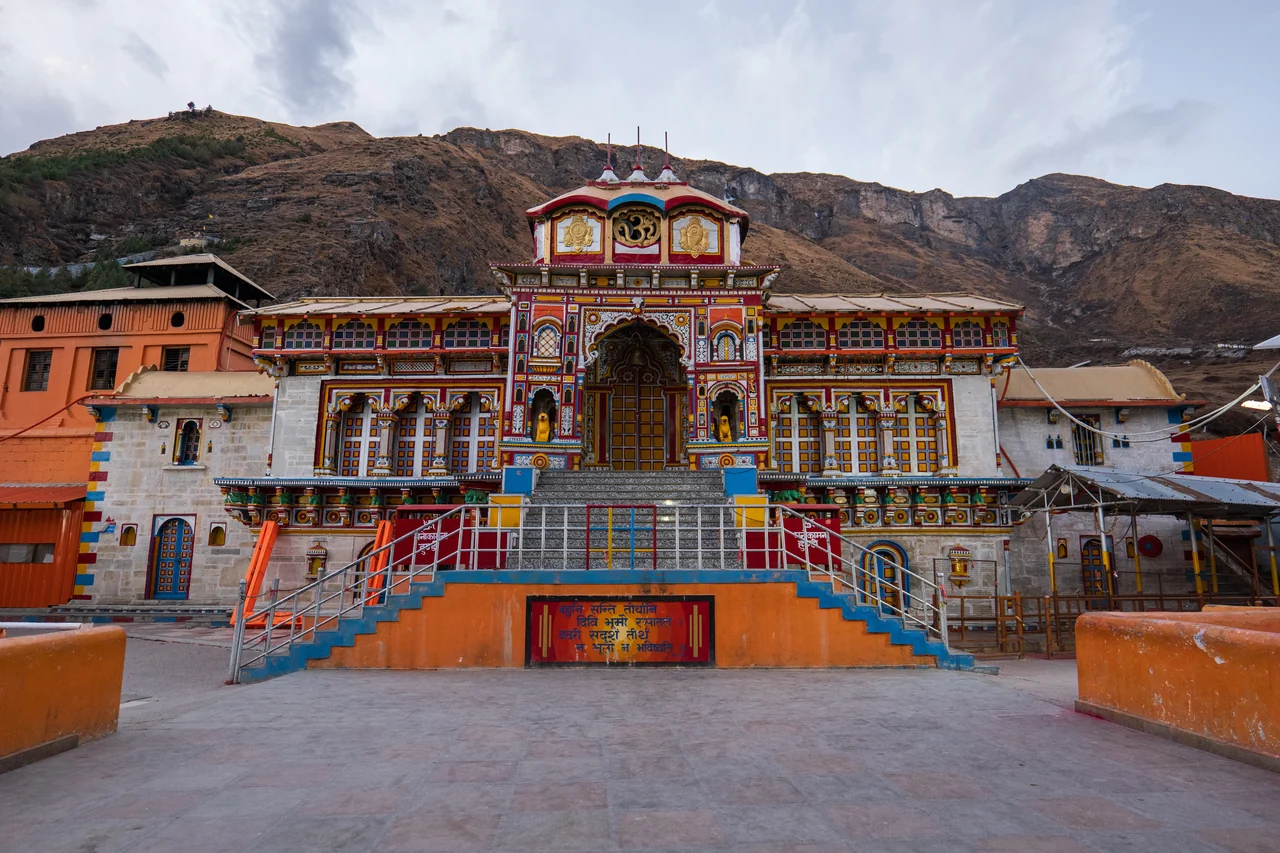
Brahma Kapal stands in Badrinath’s sacred riverside landscape. The Alaknanda runs beside the pilgrimage settlement; the Kanchi account places Badri Vishal on its bank between the Nara and Narayana mountains.
The ancestral offerings at Brahma Kapal and darshan at the Badrinath temple can form parts of one pilgrimage. Their prayers and procedures serve their respective purposes: remembrance of ancestors at the riverbank and worship of Badri Narayana at the temple.
Badrinath temple and Badarikashrama
Badri Narayana is Vishnu’s form worshipped at Badrinath. The wider sacred region is known as Badarikashrama, associated with Nara and Narayana and spiritual discipline.
Bhagavata Purana 10.52.4 describes Muchukunda reaching this abode and worshipping Hari through tapas, sustained spiritual practice. That passage explains the area’s wider religious identity. The specific reference to ancestral offerings is the Skanda Purana passage above.
Why it is called Kapalamocana
In Skanda Purana, Badarikashrama-mahatmya 2.3–15, Shiva recounts carrying Brahma’s skull. Following Vishnu’s advice, he reaches Badari, where the skull falls from his hand. Kapalamocana means release from the skull.
Chapter 6 opens with a question about that place and then praises ancestral offerings there. Its verses promise relief for the departed and describe the place as eightfold greater than Gaya. This comparison expresses the chapter’s praise of its own tirtha; it is not a calculation for choosing one pilgrimage over another.
Does pindadaan here end annual shraddha?
No such conclusion follows from these passages. A teaching attributed to Sri Jayendra Saraswati and published by Kanchi expressly says that offerings at Brahma Kapala or Gaya do not end subsequent shraddha and tarpana.
Annual shraddha remains the recurring rite on the ancestor’s lunar death-anniversary. A family should discuss how its regular rites continue with someone who knows its tradition, rather than treating a pilgrimage’s praise as permission to stop them.
Where the text says it
The passages, references and meaning
The passages below support the place descriptions above. Each identifies the text and chapter, followed by a plain-language meaning. A mahatmya is an account of a place’s sacred importance; its descriptions of spiritual benefits express the text’s religious teaching.
Skanda Purana · Vaishnava-khanda · Badarikashrama-mahatmya 6.4–5
पिण्डं विधाय विधिवन्नरकात्तारयेत्पितॄन् ।
पितृतीर्थमिदं प्रोक्तं गयातोऽष्टगुणाधिकम् ॥ ४ ॥
तिलतर्पणतो यान्ति पितरः स्वर्गमुत्तमम् ॥ ५ ॥
Meaning: The passage praises duly offered pindas as a means of rescuing ancestors from suffering. It calls this Pitritirtha eightfold greater than Gaya and says that sesame libations lead the ancestors to an excellent heaven.
Chapter 6 begins with the place where Shiva's skull fell. These verses concern ancestral offerings explicitly; the comparison with Gaya belongs to the mahatmya's own praise.
View the source for this passageShrimad Bhagavata Purana 10.52.4
बदर्याश्रममासाद्य नरनारायणालयम् ।
सर्वद्वन्द्वसहः शान्तस्तपसाराधयद्धरिम् ॥ ४ ॥
Meaning: Muchukunda reached Badarikashrama, the abode of Nara and Narayana. Bearing opposing conditions with tranquillity, he worshipped Hari through austerity.
This is the account of Muchukunda's withdrawal into spiritual practice. It establishes Badarikashrama's wider religious identity, without prescribing a particular ancestral rite.
View the source for this passageOriginal texts and other sources
Use the links below to read the source passages. Chapter and verse numbers follow these editions; another edition may arrange them differently.
- Skanda Purana, Vaishnava-khanda, Badarikashrama-mahatmya 6.3–7 — SanskritKapalamocana / Pitritirtha: pinda offerings and sesame-tarpana. Sanskrit transcription; comparison checked against G. V. Tagare’s translation.
- Skanda Purana, Badarikashrama-mahatmya 2.3–15G. V. Tagare translation: Shiva’s Kapalamocana narrative at Badari.
- Shrimad Bhagavata Purana 10.52.4 — SanskritMuchukunda at Badarikashrama, the abode of Nara and Narayana. The page’s explanation is our paraphrase.
- Kanchi Kamakoti Peetham — BadrinathThe religious institution’s account of Badri Vishal, Alaknanda and pinda offerings at Brahma Kapala.
- Kanchi publication — Sri Jayendra Saraswati, printed page 127A named teaching on continuing regular Shraddha and tarpana after offerings at Gaya or Brahma Kapala.