Dharmakupa: shraddha at Dharma Tirtha
Dharmakupa, the well of Dharma, belongs to the setting called Dharma Tirtha, associated with worship of Dharmeshvara. Kashi-khanda, Uttarardha chapter 81 also calls it Dharmandhu.
Verse 23 describes sages offering tarpana to the ancestors, performing shraddha with devotion and bathing Dharmesha with the tirtha’s water. Verse 33 then compares the satisfaction of the ancestors from pindas at Dharma Tirtha with that at Gaya. It is a direct reference to ancestral food offerings at this named place.
Manikarnika: tarpana with the tirtha’s water
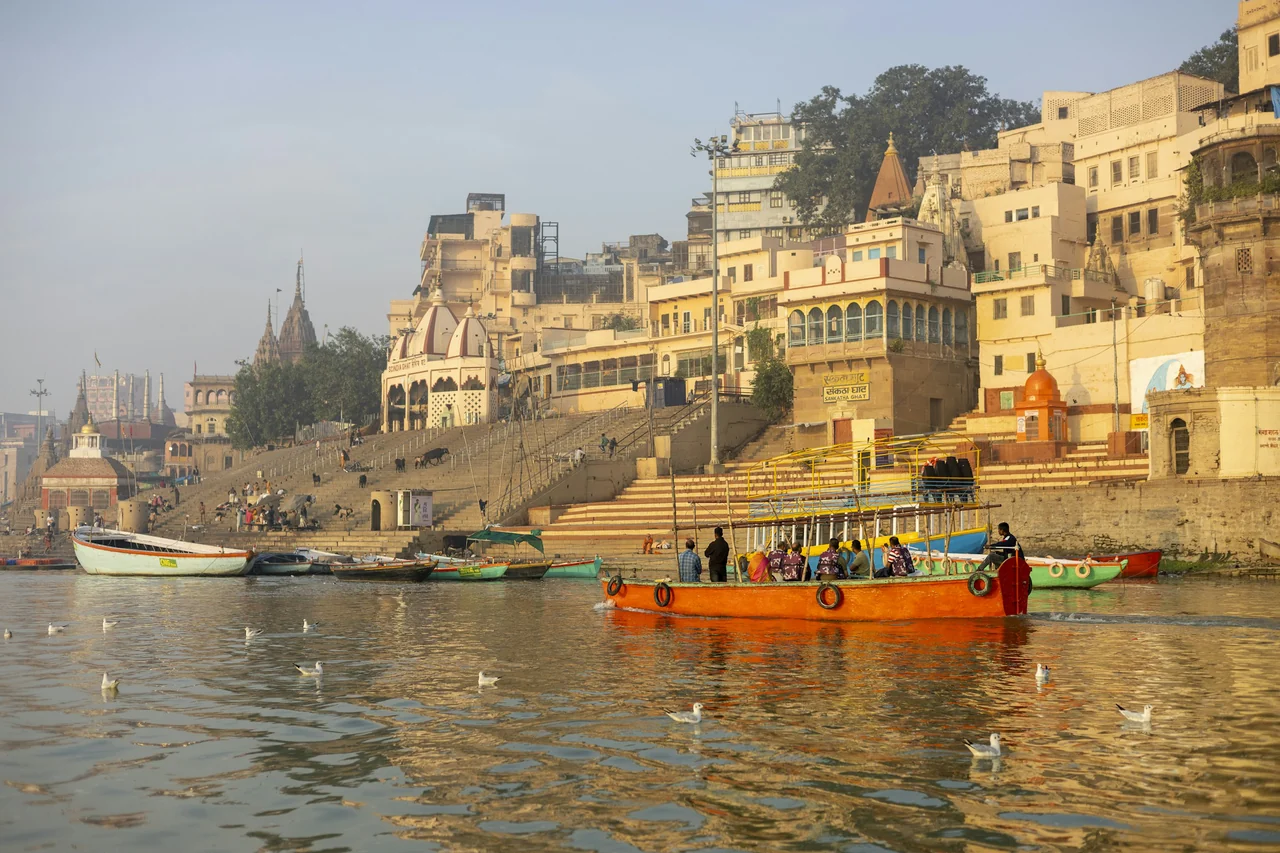
Manikarnika is known for its cremation ground on Kashi’s Ganga riverfront. The Kashi-khanda also praises ancestral water offerings here, giving it a place in the rites of remembrance.
Uttarardha 84.92 compares offering Manikarnika’s water to the ancestors with shraddha at Gaya using honey and payasa, milk-rice. The verse concerns tarpana. A family coming for this water offering is not necessarily attending a funeral; tarpana and shraddha are also performed in remembrance of ancestors long after the death.
Pishachamochana: the tank and release described in its story
Kashi-khanda, Uttarardha chapter 54 begins with Kapardisha and the sacred tank Vimalodaka. Its story of release from pishacha condition gives the place the name Pishachamochana. This condition is part of the text’s religious account of the departed.
Verses 75–76 describe bathing, sandhya-tarpana and pinda offerings for departed relatives, and promise their release from that condition. Verse 83 identifies the setting as Varanasi. Verse 77 singles out Margashirsha Shukla Chaturdashi, the fourteenth lunar day of that month’s bright fortnight. The text therefore describes an observance beyond Pitrapaksha as well.
Which rite does a family need?
The passages establish the religious importance of these places; the procedure for an individual family depends on whom the rite is for and the family’s tradition. Ancestral tarpana, ordinary shraddha and a rite undertaken for a particular condition of the departed are different purposes. A place’s association with the last of these does not by itself diagnose the condition of someone’s ancestors.
The verses below follow the linked Sanskrit Kashi-khanda. Keep “Uttarardha” with the chapter number when looking in another edition: the section name is essential to finding the right passage.
Where the text says it
The passages, references and meaning
The passages below support the place descriptions above. Each identifies the text and chapter, followed by a plain-language meaning. A mahatmya is an account of a place’s sacred importance; its descriptions of spiritual benefits express the text’s religious teaching.
Skanda Purana, Kashi-khanda, Uttarardha 81.23
अतर्पयन्पितॄन्दिव्यान्व्यधुः श्राद्धानि श्रद्धया ।
धर्मेशं स्नापयामासुस्तत्तीर्थाम्बुभृतैर्घटैः ॥२३॥
Meaning: The sages offered tarpana to the divine ancestors, performed Shraddha with devotion, and bathed Dharmesha with vessels of water from the tirtha.
The scene concerns Dharma Tirtha / Dharmakupa.
View the source for this passageSkanda Purana, Kashi-khanda, Uttarardha 81.33
यथा गयायां तृप्ताः स्युः पिंडदाने पितामहाः ।
धर्मतीर्थे तथैव स्युर्न न्यूनं नैव चाधिकम् ॥३३॥
Meaning: The text says that pinda offerings at Dharma Tirtha satisfy the ancestors as at Gaya, neither less nor more.
This is the chapter’s praise of the named Dharma Tirtha.
View the source for this passageSkanda Purana, Kashi-khanda, Uttarardha 84.92
मणिकर्ण्यंबुभिर्येन तर्पिताः प्रपितामहाः ।
तेन श्राद्धानि दत्तानि गयायां मधुपायसैः ॥९२॥
Meaning: One who has offered Manikarnika’s water to the ancestors is described as having offered Shraddha at Gaya with honey and milk-rice.
The verse directly concerns ancestor-tarpana with Manikarnika’s water.
View the source for this passageSkanda Purana, Kashi-khanda, Uttarardha 54.75–76
अस्मिंस्तीर्थे महापुण्ये ये स्नास्यंतीह मानवाः ।
पिंडांश्च निर्वपिष्यंति संध्यातर्पणपूर्वकम् ॥७५॥
दैवात्पैशाच्यमापन्नास्तेषां पितृपितामहाः ।
तेपि पैशाच्यमुत्सृज्य यास्यंति परमां गतिम् ॥७६॥
Meaning: The passage describes bathing and pinda offerings preceded by sandhya-tarpana. In its sacred account, ancestors who have entered a pishacha condition leave that condition and attain a higher state.
Verse 74 names Pishachamochana; verse 83 identifies the setting as Varanasi.
View the source for this passageOriginal texts and other sources
Use the links below to read the source passages. Chapter and verse numbers follow these editions; another edition may arrange them differently.
- Skanda Purana, Kashi-khanda, Uttarardha 81 — SanskritDharma Tirtha: tarpana and Shraddha in verse 23; pinda offerings in verse 33.
- Skanda Purana, Kashi-khanda, Uttarardha 84 — SanskritManikarnika’s water and ancestor-tarpana, verse 92.
- Skanda Purana, Kashi-khanda, Uttarardha 54 — SanskritPishachamochana: verses 74–76; Varanasi identified in verse 83.