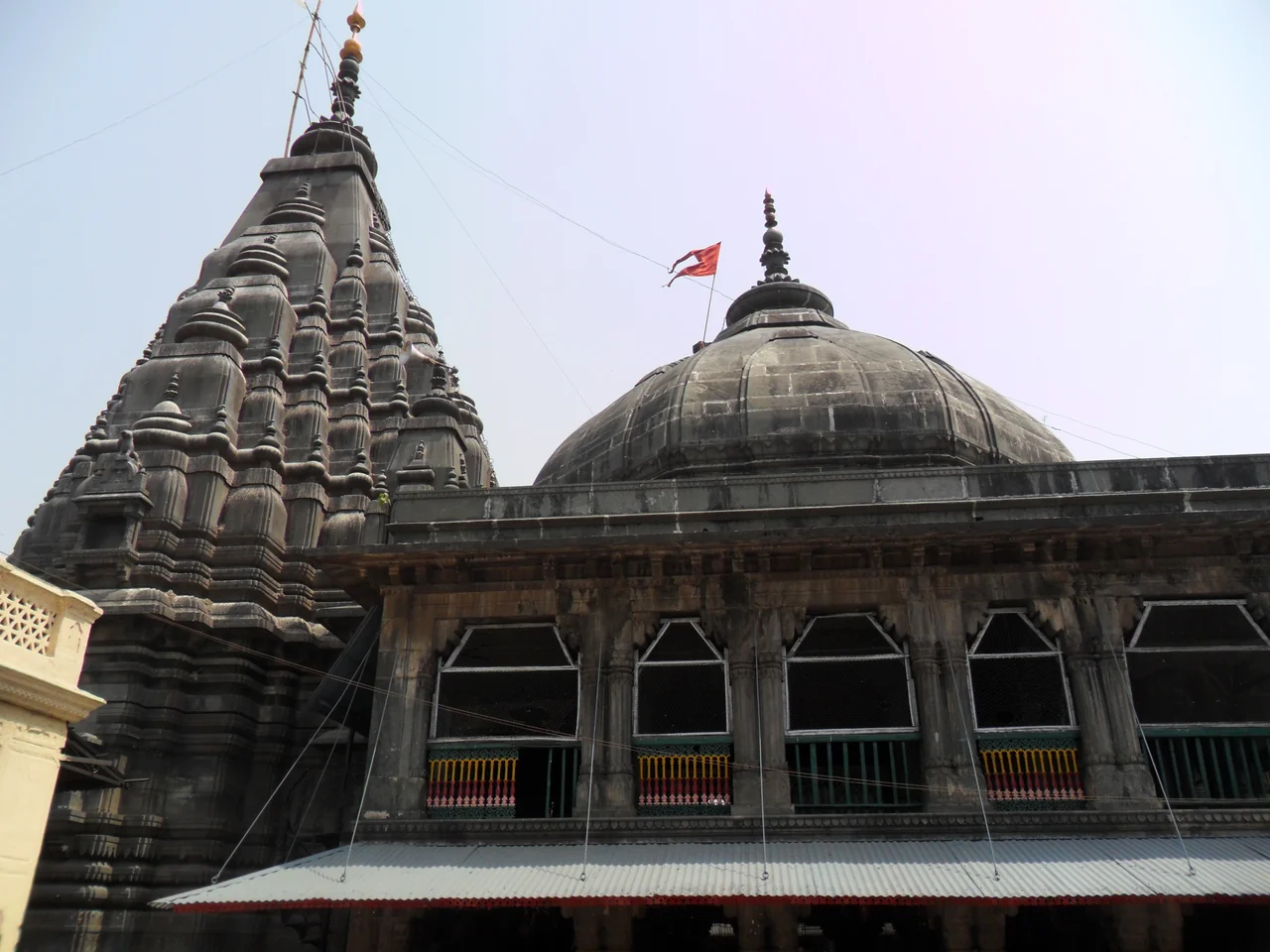
Where the texts place the ancestral rites
The following references identify the named places and the rites described there. They follow the chapter numbering of the linked Sanskrit editions. Ancient sacred boundaries and present-day neighbourhoods do not always coincide.
| Place | What the passage concerns | Where to read |
|---|---|---|
| Falgu | River and ancestral water offerings | Garuda 1.84.14–16,22; Vayu, Uttarardha 49.14–23 |
| Vishnupad | Vishnu’s sacred footprint and pinda offerings | Vayu 49.54–67; Saroddhara 13.111–113 |
| Akshayavat | Banyan, shraddha and feeding | Garuda 1.83.25;1.84.30–33; Vayu 49.93–100 |
| Pretashila | Sacred stone and prayers for departed relatives | Garuda 1.86.1–4 |
| Gayashiras | The named sacred area within Gayakshetra | Garuda 1.83.3–5; Vayu 49.50–56,84–87 |
| Uttara Manasa | Sacred pool, bathing, shraddha and Sun worship | Garuda 1.84.6–7; Vayu 49.1–6 |
| Dakshina Manasa | Southern Manasa and its group of three tirthas | Garuda 1.84.8–11; Vayu 49.6–13 |
| Matangavapi | Matanga’s sacred water-place and ancestral rites | Garuda 1.84.17; Vayu 49.30–32 |
| Dharmaranya | Dharma’s sacred setting and the well/post ritual | Garuda 1.84.17–18; Vayu 49.29–36 |
| Brahmasaras | Brahma’s lake, shraddha and the sacrificial post | Vayu 49.37–44 |
“Garuda” below refers to the Garuda Purana’s Acharakanda in the Purvakhanda. “Vayu” refers to the Vayu Purana’s Uttarardha, chapter 49, in the linked Sanskrit text. The full references and original passages appear below.
Falgu: bathing, tarpana and pindas
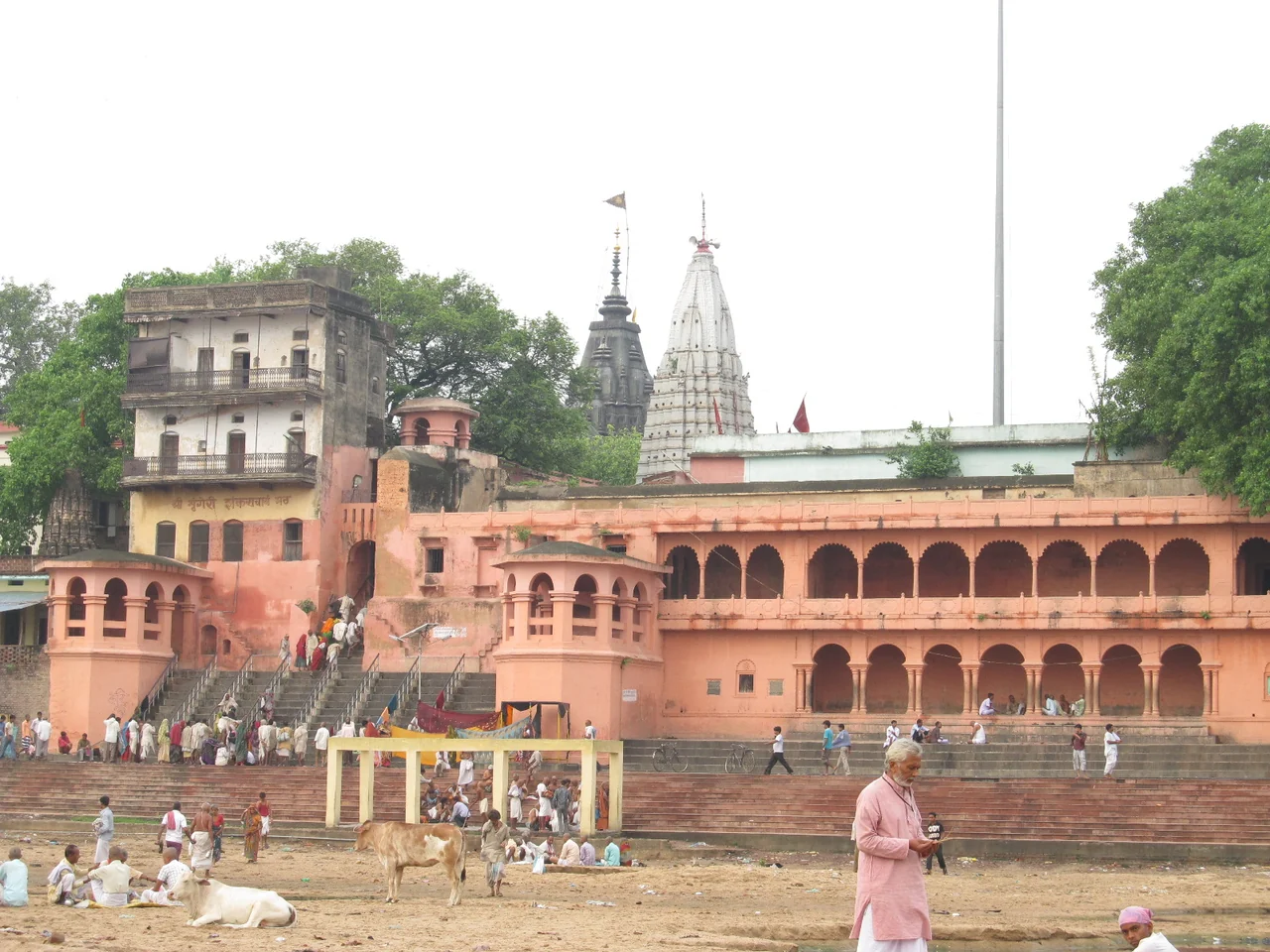
The Falgu is central to Gaya’s ancestral rites. Families offer water for the departed through tarpana, and food in the form of pindas. Vayu Purana, Uttarardha 49.20–21 gives a prayer for the ancestors’ welfare, followed by tarpana and shraddha with pindas according to the performer’s own ritual tradition.
Garuda Purana 1.84.14–16 places pindadaan at Phalgu-tirtha alongside reverence to Pitamaha and Gadadhara, Vishnu bearing the mace. Later, 1.84.22 describes bathing and tarpana at the Falgu before shraddha at Gayashiras and the footprint shrines. The river thus connects several stages of the pilgrimage.
Vishnupad: offerings at Vishnu’s sacred footprint
The Vishnupad temple centres on a footprint revered as Vishnu’s. Ancestral offerings here are accompanied by worship of Vishnu and prayers for the departed.
Vayu Purana, Uttarardha 49.54–56 directly names Vishnupada and describes Adi Gadadhara’s presence through the divine footprints for the ancestors’ liberation. Verses 57–67 name other padas, including those of Rudra, Brahma and Kashyapa. These references explain the place of several footprint shrines in the pilgrimage.
The Garuda-purana-Saroddhara 13.111–113 describes worshipping Vishnu’s feet with tulsi and then offering pindas. This later compilation has its own numbering; its chapter 13 should not be confused with chapter 13 of the complete Garuda Purana.
Akshayavat: the banyan and the concluding offerings
Akshayavat is Gaya’s sacred banyan associated with shraddha. Vata means banyan and akshaya means that which does not diminish. Garuda Purana 1.83.25 praises shraddha here as leading the ancestors to Brahmaloka, the realm of Brahma.
The tree’s place in the journey becomes clearer in Garuda 1.84.30–33 and Vayu 49.91–100. After the account of Gadalola, the texts describe shraddha at the banyan and feeding a Brahmin near it. Vayu 49.94 praises satisfying a Brahmin near the tree even with greens or water. Thus the account includes the family’s ancestral offering, hospitality and worship of the tree’s sacred presence. Gaya’s Akshayavat is distinct from the banyan of the same name at Prayag.
Pretashila: prayers for departed relatives
Pretashila is a sacred hill associated with rites for departed relatives and prayers for release from preta condition, the religious state of the departed described in these texts.
Garuda Purana 1.86.1–4 gives the sacred stone a wider identity. It calls Pretashila present in three settings: Prabhasa, Pretakunda and Gayasura’s head. The following verses connect shraddha there with departed friends and relatives. This is the textual background to the place’s ancestral associations.
The same chapter describes Adi Gadadhara and other divine presences in Gaya’s stone landscape (1.86.7–18), linking the rock, Gayasura’s story and the act of offering for the departed.
Gayashiras: the sacred area within Gaya
Shiras means head. Gayashiras, also written Gayashir, is the name of a sacred area within the wider Gayakshetra. Garuda Purana 1.83.3 distinguishes the two: it describes Gayakshetra as five kroshas and Gayashiras as one. The passage praises pindadaan there as bringing lasting satisfaction to the ancestors.
Vayu 49.50–56 describes this area through named landmarks and relates it to Phalgu-tirtha and Gayasura’s head. These are the text’s sacred boundaries; they do not by themselves provide a precise modern walking route.
Later, Vayu 49.84–87 describes pindas offered in the names of the departed and praises even a small offering, giving roots and fruits among the foods mentioned. The emphasis is on the identified ancestors and the place of offering. Gayashiras therefore helps explain the wider meaning of the pilgrimage beyond one temple visit.
Uttara Manasa: the northern sacred pool
Uttara Manasa is a sacred pool associated with bathing, ancestral offerings and Sun worship. Vayu 49.1–4 calls it a lake and describes bathing, tarpana and shraddha with pindas. Garuda 1.84.6–7 also names bathing and shraddha here.
The Vayu text then directs the pilgrim to proceed in silence to Dakshina Manasa (49.6). V. D. N. Rao’s pilgrimage account published by Kanchi Kamakoti Peetham identifies Uttara Manasa as a distinct sarovar associated with Uttara Arka, the northern Sun shrine.
Dakshina Manasa, Udichi and Kanakhala
Dakshina Manasa belongs to a group of three tirthas named in Vayu 49.6–13: Udichi, Kanakhala and Dakshina Manasa. The passage describes bathing, separate shraddha observances and Sun worship. Garuda 1.84.8–11 also names Dakshina Manasa and Kanakhala.
The later Kanchi-published pilgrimage account associates these names with the Surya Kunda area near Vishnupad. This supplies a traditional identification of the modern setting, alongside the ancient account of the rites.
Matangavapi: bathing and ancestral offerings
Matangavapi is the sacred pool or well bearing Matanga’s name. Garuda 1.84.17 mentions pinda offerings there during the journey to Dharmaranya. Vayu 49.30–32 describes bathing followed by tarpana and shraddha, and reverence to Matangesha.
The accompanying prayer calls the gods and guardians of the world to witness the pilgrim’s arrival and fulfilment of an obligation to the ancestors. The same prayer appears in Garuda 1.83.36. Matangavapi and Dharmaranya are connected places in this itinerary.
Dharmaranya: Dharma’s place of sacrifice
Aranya means forest. The Vayu Purana explains Dharmaranya through Dharma’s sacrifice there (49.29). The name thus carries the memory of a sacred forest-setting, even when a present-day pilgrim encounters built shrines and wells.
After Matangavapi, Vayu 49.32–33 describes shraddha at Brahmatirtha’s well and speaks of offerings between a kupa, well, and a yupa, sacrificial post. Garuda 1.84.17–18 preserves the same connection between Dharmaranya, Matanga’s water-place and the well/post setting. The wider Vayu passage continues with reverence to Dharma, Dharmeshvara and the Mahabodhi tree (49.33–36). This gives the journey a broader sacred setting than a single offering platform.
Brahmasaras: Brahma’s lake and the sacrificial post
Brahmasaras, or Brahma Sarovar, is Brahma’s sacred lake in the Gaya pilgrimage. Vayu 49.37–40 names it after the Dharmaranya group and describes bathing, shraddha with pindas, offerings between the well and sacrificial post, and walking reverently around the post.
Verses 42–44 continue with watering mango trees in connection with the ancestors. Food offerings, water, trees and worship all have a place in this account. The Kanchi-published pilgrimage description likewise names Brahma Sarovar among Gaya’s sacred sites.
Why Gaya is sacred: Gayasura and Gadadhara
Gayasura’s story explains the sacred ground on which these rites take place. In Garuda Purana 1.82.2–8, his severe penance alarms the gods; Vishnu strikes him with a mace and remains at Gaya as Gadadhara, “the bearer of the mace.” The account then praises sacrifice, shraddha, pindadaan and bathing. This is the chapter’s particular telling, distinct from the familiar account centred on Vishnu’s foot subduing Gayasura.
The Valmiki Ramayana also knows Gaya in connection with the ancestors. In Ayodhya-kanda 2.107.11–13, Rama recalls a saying associated with King Gaya’s ancestral sacrifice and the hope that a descendant will go to Gaya. That passage concerns the importance of the ancestral journey; it does not narrate the popular story of Sita’s sand-pindas and the curse upon the Falgu.
How the sacred places fit into the pilgrimage
Vayu Uttarardha 49 describes a five-day sequence: the Manasa pools and Falgu; Dharmaranya and Matangavapi; Brahmasaras; Gayashiras and the footprint shrines; then Gadalola and Akshayavat. Garuda 1.84 preserves a closely related sequence. The itinerary connects the named places and explains why a Gaya pilgrimage can include several kinds of ancestral offering.
The texts describe bathing, deity worship, tarpana, pindadaan, prayer and feeding. Shraddha, tarpana and pindadaan explains these terms. A family’s present-day itinerary depends on its intended rite and tradition; the textual five-day sequence is not the duration of every observance.
Planning a family visit to Gaya
The sites described here are spread across Gaya and its surroundings. The Falgu riverbed, stone steps, temple precincts and hill sites can require different amounts of walking. Tell the officiating priest in advance if an older relative needs a shorter route, assistance or time to rest, and agree which places the intended rite will include.
Confirm current temple-entry requirements, access and riverbed conditions locally before going. The textual itinerary is not a guarantee that every site will be accessible in the same way on the day. Gather the names and family details needed for the ceremony; the preparation checklist for ancestral rites covers what to clarify before travel.
Where the text says it
The passages, references and meaning
The passages below support the place descriptions above. Each identifies the text and chapter, followed by a plain-language meaning. A mahatmya is an account of a place’s sacred importance; its descriptions of spiritual benefits express the text’s religious teaching.
Garuda Purana, Acharakanda 1.83.3
पञ्चक्रोशं गयाक्षेत्रं क्रोशमेकं गयाशिरः । तत्र पिण्डप्रदानेन तृप्तिर्भवति शाश्वती ॥
Meaning: The text distinguishes the wider Gaya field from Gayashiras and associates pindadaan there with enduring satisfaction.
The chapter opens by describing the extent of the sacred area.
View the source for this passageGaruda Purana, Acharakanda 1.84.22
फल्गुतीर्थे चतुर्थेऽहनि स्नात्वा देवादितर्पणम् । कृत्वा श्राद्धंगयाशीर्षे कुर्याद्रुद्रपदादिषु ॥
Meaning: On the fourth day of the journey described, bathe at Phalgu-tirtha, perform tarpana, and undertake shraddha at Gayashiras and Rudrapada and other sites.
This verse belongs to the chapter's particular pilgrimage sequence.
View the source for this passageGaruda Purana, Acharakanda 1.83.25, second half
तथाक्षयवटे श्राद्धी ब्रह्मलोकं नयेत्पितॄन् ॥
Meaning: Shraddha at Akshayavat is praised as bringing the ancestors to Brahmaloka.
An explicit reference to Akshayavat among the chapter's named places for ancestral rites.
View the source for this passageGaruda Purana, Acharakanda 1.86.1
येयं प्रेतशिला ख्याता गयायां सा त्रिधा स्थिता । प्रभासे प्रेतकुण्डे च गयासुरशिरस्यपि ॥
Meaning: The Pretashila known at Gaya is described as present in three places: Prabhasa, Pretakunda and Gayasura's head.
Verses 2–4 then explain its relationship to departed relatives and shraddha.
View the source for this passageGaruda Purana, Acharakanda 1.82.6, first half
अतो गदाधरो विष्णुर्गयायां मुक्तिदः स्थितः ।
Meaning: Vishnu, bearing the mace, remains at Gaya as the giver of liberation.
This follows the account of Gayasura in 1.82.2–5; it explains the name Gadadhara in this telling.
View the source for this passageVayu Purana, Uttarardha 49.55
विष्ण्वादिपदरूपेण पितॄणां मुक्तिहेतवे।
एतद्विष्णुपदं दिव्यं दर्शनात्पापनाशनम् ।। ४९.५५ ।।
Meaning: The passage describes the divine footprints, including Vishnu’s, as present for the liberation of the ancestors, and praises the sight of Vishnupada.
Verses 54–56 connect Adi Gadadhara, the footprints and ancestral offerings; verses57–67 name further padas.
View the source for this passageVayu Purana, Uttarardha 49.30, second half
मतङ्ग वाप्यां यः स्नात्वा तर्पणं श्राद्धमाचरेत् ।। ४९.३० ।।
Meaning: The text expressly describes bathing at Matangavapi followed by tarpana and shraddha.
The next verses describe reverence to Matangesha and a prayer calling the gods to witness fulfilment of the ancestral obligation.
View the source for this passageVayu Purana, Uttarardha 49.37
तृतीये ब्रह्मसरसि स्नात्वा श्राद्धं सपिण्डकम्।
कृत्वा सर्व्वप्रमाणेन मन्त्रेण विधिवत्सुतः ।। ४९.३७ ।।
Meaning: The third stage of the sequence includes bathing at Brahmasaras and duly performing shraddha with pindas and the prescribed prayer.
Verses 38–44 continue with the well, sacrificial post, circumambulation and watering mango trees.
View the source for this passageOriginal texts and other sources
Use the links below to read the source passages. Chapter and verse numbers follow these editions; another edition may arrange them differently.
- Garuda Purana, Acharakanda 83 — SanskritPrimary Sanskrit text; Purvakhanda, Prathamamsha, Acharakanda. Electronic chapter and verse numbering, cross-checked with the historical Dutt translation.
- Garuda Purana, Acharakanda 84 — SanskritPrimary Sanskrit text; Purvakhanda, Prathamamsha, Acharakanda. Electronic chapter and verse numbering, cross-checked with the historical Dutt translation.
- Garuda Purana, Acharakanda 86 — SanskritPrimary Sanskrit text; Purvakhanda, Prathamamsha, Acharakanda. Electronic chapter and verse numbering, cross-checked with the historical Dutt translation.
- Garuda Purana, Acharakanda 82 — SanskritPrimary Sanskrit text; Purvakhanda, Prathamamsha, Acharakanda. Electronic chapter and verse numbering, cross-checked with the historical Dutt translation.
- Garuda-purana-Saroddhara 13.111–113 — Wood & Subrahmanyam, 1911Vishnu’s feet and pinda offerings. A Saroddhara compilation, distinct from chapter 13 of the complete Garuda Purana.
- Garuda Purana — Gaya narrative, chapter 82 (M. N. Dutt, 1908)Identified translation of the religious Gayasura narrative and Gaya’s sacred importance; not a dated historical founding account.
- Vayu Purana, Uttarardha 49 — Gaya’s named tirthas and ancestral ritesPrimary Sanskrit chapter. Covers Manasa pools(1–13), Falgu(14–28), Dharmaranya and Matangavapi(29–36), Brahmasaras(37–44), Gayashiras and sacred footprints(50–87), and Akshayavat(93–100). Locators follow this Uttarardha numbering.
- V.D.N.Rao, Essence of Pradhana Tirthas — Gaya, printed pages 52–54Later Kanchi-hosted pilgrimage compilation; traditional identifications of Gaya’s sacred pools.
- Valmiki Ramayana, Ayodhya-kanda 2.107.11–13 — Gaya and the ancestorsSanskrit with K.M.K.Murthy’s word-by-word English translation. Rama recalls the ancestral sacrifice of King Gaya and the wish that a descendant might visit Gaya. Does not narrate the Sita/Falgu-curse legend.